



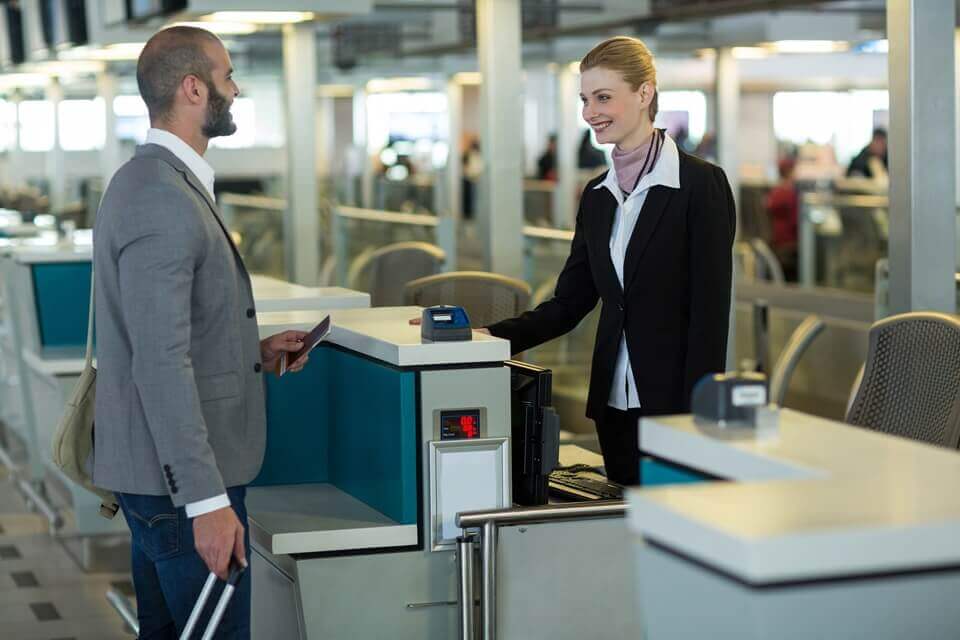
Automated Passport Control (APC) is a process developed by the U.S. Customs and Border Protection (CBP) that allows eligible travelers, including U.S. citizens, U.S. legal permanent residents, Canadian citizens, Visa Waiver Program participants, and specific U.S. visa holders to expedite the passport check and border control process.
To use APC, travelers simply have to scan their passport, take a photograph, and complete a CBP inspection verifying biographic and flight information at a self-service kiosk. After the inspection, a receipt is issued, which they bring to a CBP officer to finalize their inspection for entry into the United States. This leads to significantly reduced waiting times and faster processing.
APC is available at various airports and cruise ports and it is totally free to use. It also requires no pre-registration or membership. The program aims to improve the traveler’s experience while still maintaining high levels of security.
How does Automated Passport Control work?
Automated Passport Control (APC) works by allowing eligible travelers to use self-service kiosks to expedite the passport check and border control process. Here is more information on exactly how the process typically works.
Eligibility
APC is available for U.S. citizens, U.S. legal permanent residents, Canadian citizens, Visa Waiver Program participants, and a limited number of specific U.S. visa holders.
Using the Kiosk
Travelers start by going to an APC kiosk at the airport or cruise port. They then scan their passport and answer a few questions related to their personal information.
Receipt Issuance
After answering the questions, the kiosk prints out a receipt. The traveler must present this receipt along with his or her passport to a Customs and Border Protection Officer for inspection.
Final Inspection
The officer checks the receipt, completes the inspection, and determines if the traveler is permitted to enter the U.S.
No Membership Required
Travelers do not need to sign up or pay any membership fees to use APC. As long as they are eligible, they can simply start using the service.
Mobile Passport App
For added convenience, eligible travelers can use the Mobile Passport app to expedite the process even further by completing administrative tasks before arrival in the United States.
Languages and Family Processing
The kiosks support multiple languages, including English, Spanish, German, Italian, French, Dutch, Chinese, and Japanese.
People residing at the same address can use the same kiosk and have their details processed together, saving time for families.
What documents are required for automated passport control?
Automated Passport Control (APC) requires the following documents:
Passport
APC is available for U.S. citizens, permanent U.S. legal residents, eligible participants in the Visa Waiver Program, Canadian citizens, and certain specific American visa holder travelers. These individuals have to scan their passports at the APC kiosks.
Document Verification
The kiosk scans the passport’s machine-readable zone (MRZ) to validate the document type, expiration date, and proper format. If there’s a problem, the traveler should try scanning it again before doing anything else.
Travel Document Information
After scanning the passport, the kiosk displays the traveler’s information. If this is correct, the traveler presses Accept. If not, the traveler can rescan the document or press Go Back to try again.
Customs Declaration Form
APC eliminates the need for a physical CBP Customs Declaration Form. Instead, passengers answer a few questions relating to their personal information at the self-service kiosks.
Digital Bar-Coded Receipt
After completing the process, the kiosk issues a receipt, which passengers have to present to a Customs and Border Protection Officer along with their passport for final inspection and entry into the U.S.
APC kiosks are available at an increasing number of US airports and support multiple languages, including English, Spanish, German, Italian, French, Dutch, Chinese, and Japanese. Families and people residing at the same address can use the same kiosk, and their details will be processed together.
At which US airports is Automated Passport Control available?
Automated Passport Control (APC) is currently available at more than 40 US airports, including Albuquerque International Airport (ABQ), Denver International Airport (DEN), Edmonton International Airport (YEG), John F. Kennedy International Airport (JFK), Kansas City International Airport (MCI), Los Angeles International Airport (LAX), Newark Liberty International Airport (EWR), Oakland International Airport (OAK), Ontario International Airport (ONT), Philadelphia International Airport (PHL), San Juan Seaport (PUE), Portland International Airport (PDX), Phoenix Sky Harbor International Airport (PHX), Seattle Sea-Tac Airport (SEA), Southwest Florida International Airport (RSW), Salt Lake City International Airport (SLC), T.F. Green International Airport (PVD), Stewart International Airport (SWF), and Vancouver Seaport (YHC).
Who are not allowed to use Automated Passport Control?
Those who are specifically excluded from using the Automated Passport Control (APC) system include individuals who do not qualify for the Visa Waiver Program (VWP) and who have been in Iraq, Iran, Yemen, Libya, Syria, Sudan, or Somalia since March 1, 2011.
Apart from that, holders of certain types of visas are also not eligible to use APC. This is because the program was originally specifically designed for people who are entering the U.S. without a U.S. visa. Those with work visas are, for example, not allowed to use the APC system. U.S. and Canadian citizens, as well as B-1/B-2 or C-1/D visa holders. are, however, allowed to use Automated Passport Control (APC) kiosks at U.S. airports.
What is the success rate of APC kiosks in reducing waiting times at US airports?
The Automated Passport Control (APC) kiosks have definitely been successful in reducing waiting times for travelers who are arriving in the United States. At Chicago O’Hare International Airport, for example, the APC kiosks managed to reduce the average waiting time during peak hours by an impressive 33% and the number of passengers waiting for more than 60 minutes by 58%.
What are the differences and similarities between the APC (Automated Passport Control) and MPC (Mobile Passport Control) programs?
The Automated Passport Control (APC) and Mobile Passport Control (MPC) programs were both designed to expedite the passport check and border control process for eligible travelers entering the United States. There are, however, both similarities and differences.
Similarities with MPC
Both APC and MPC aim to streamline the entry process and reduce waiting times for qualifying travelers.
Both programs are free to use and do not require pre-registration or membership.
Both APC and MPC maintain high levels of data security and protection when handling personal information.
Differences with MPC
APC is a self-service kiosk system that allows eligible passengers to scan their passports and answer a few questions related to their personal information. MPC, on the other hand, is a mobile app that allows eligible travelers to submit their passport and customs declaration data via their smartphone or other mobile device.
APC is available to U.S. citizens and permanent residents, Canadian citizens, as well as international passengers on the Visa Waiver Program and passengers with a B1/B2 or D visa. MPC, on the other hand, is only available to U.S. citizens and Canadian citizens who are traveling.
APC is available at more than 40 US airports, while MPC is currently available at 35 US international airports and 4 seaports of entry.
The bottom line
Both APC and MPC were designed to expedite the entry process for eligible travelers, but they differ in the way they collect and process passenger information, as well as the eligibility requirements and the number of airports where they are available.
How does the Automated Control system differ from the ESTA program?
There are certain similarities between these two programs but there are also important differences.
Similarities with ESTA
Expedited Entry Process: Both APC and ESTA aim to expedite the entry process for travelers entering the United States.
Enhanced Traveler Experience: Both systems focus on enhancing the traveler’s experience by reducing wait times and congestion at border control.
Security Measures: Both APC and ESTA prioritize high levels of security and data protection when handling personal information.
Differences with ESTA
Purpose: APC is a program by U.S. Customs and Border Protection that speeds up the passport check and border control process for eligible travelers, while ESTA (Electronic System for Travel Authorization) allows certain travelers to enter the U.S. without a visa.
Eligibility: APC is available for U.S. citizens, U.S. legal permanent residents, Canadian citizens, Visa Waiver Program participants, and specific U.S. visa holders, while ESTA is specifically for travelers from Visa Waiver Program countries.
Process: APC involves using self-service kiosks to scan passports and complete a CBP inspection, while ESTA requires travelers to apply online before their trip to the U.S.
Usage: APC is used at airports and cruise ports to expedite the entry process, while ESTA is an online system for pre-authorization before travel to the U.S.
Cost: APC is free to use and does not require pre-registration or membership, while ESTA requires an application fee.
As you have seen above, while both APC and ESTA aim to facilitate entry into the U.S., they differ in their purpose, eligibility criteria, application process, and usage, providing travelers with different benefits and functionalities based on their individual travel needs and circumstances.